



California occupies a special place in the political, economic, and cultural landscape of the United States. It is not only the most populous state in the country and the largest economy among all states, but also a kind of laboratory for social and political experiments. Everything that starts in California — from environmental standards to innovations in technology and human rights — often becomes a model for the whole of America over time. The reasons for this lie both in the state’s economic power and in its particular political temperament, its penchant for reform, and its influence on national trends.
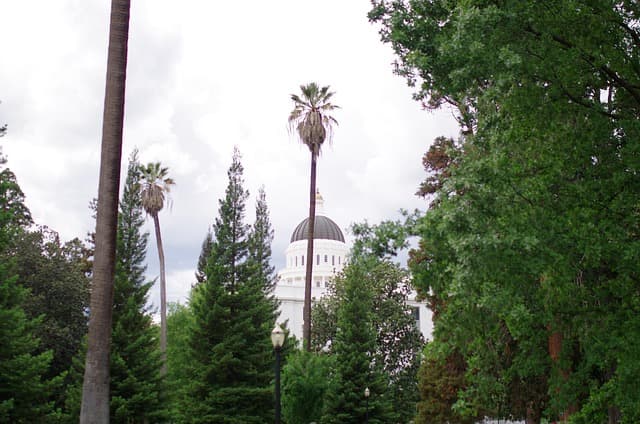
First, California is the engine of the American economy. It is home to the largest companies in the technology, entertainment, agriculture, and green energy sectors. Silicon Valley, Hollywood, and the agricultural valleys of Central California—each of these areas sets the direction for the development of entire industries in its own way. When state legislation introduces new environmental standards for car manufacturers or energy companies, corporations wishing to operate in this huge market are forced to adapt. Since California accounts for almost a fifth of the country’s economy, its standards inevitably spread throughout the United States. This is the so-called “California market effect”: companies are more likely to implement uniform standards for all states than to create separate products for a single region. Thus, decisions made in Sacramento influence laws and business practices from New York to Texas.
Second, California’s political culture is characterized by progressiveness and experimentation. It was here that measures to combat climate change, develop renewable energy sources, protect the rights of minorities and migrants, and promote the idea of social justice in the technological age were first introduced. Many initiatives that once seemed radical — such as the introduction of strict emissions standards, the legalization of marijuana, and mandatory quotas for women on corporate boards — have subsequently been discussed and implemented at the federal level or in other states. California is not afraid to be the first and, as a rule, takes on the role of a “test case” for future US legislation.
In addition, the state is strongly influenced by demographic changes that reflect broader trends across the country. California’s population is highly ethnically and culturally diverse: the interests and voices of many communities—Latino, Asian, African American, and immigrant—intersect here. Politicians shaping policy in this environment are forced to seek new models of interaction between different social groups, making California a kind of harbinger of future American demographics. What seems like a pressing challenge here today becomes a reality for the whole country tomorrow.
Technological progress originating in California also influences political thinking. Issues of data privacy, artificial intelligence regulation, and the relationship between the state and technology corporations are discussed here before anywhere else. The state actively shapes its own laws on the protection of citizens’ digital rights, and these laws become a model for federal initiatives. It can be said that California’s political philosophy is based on an attempt to combine innovation and ethics — a desire to use technological progress not to the detriment of society, but to strengthen democracy and social stability.
Finally, California plays a special role in the cultural and symbolic dimension of American politics. Its image as a place where new ideas are born, where boldness, risk-taking, and rethinking of familiar norms are possible, makes it a magnet for young activists, entrepreneurs, and politicians. It is a space where idealism is combined with pragmatism, and dreams of the future are perceived not as utopia, but as a challenge. Many of the ideas that define the US political agenda in the 21st century — the fight against the climate crisis, equal opportunities, technological justice — first take shape here.
Thus, California’s politics shape the future of the entire country, not because this state is richer or more influential than others, but because it serves as a reflection and harbinger of the processes that are gradually sweeping across America. In its successes and contradictions, in the struggle between progress and reality, California shows what the country could become tomorrow. The US is often called the “nation of the future” — and in this sense, California is its laboratory, where that future is being created today.